Running More Than One Brand? How to Keep Invoicing Organized Across Businesses
Two trading names, one set of books. How to give each brand its own invoices and numbering without duplicating customers, spreadsheets or effort.
Written by: Hectile TeamPublished 7 min read
In this article0% read
- Why multi-brand invoicing gets messy
- Brands vs separate businesses: get this right first
- What each brand should have, and what should be shared
- A practical setup, step by step
- Keeping one customer list
- Numbering across brands
- A worked example: one customer, two brands
- Team access across brands
- How Hectile handles more than one brand
- Mistakes to avoid
- Frequently asked questions
Meera runs a bakery in Kochi. Two years ago she started a catering service under a different name, run from the same kitchen by the same company. Within six months she had two invoice templates, two numbering systems, two customer spreadsheets and one recurring problem: a café that ordered from both businesses kept receiving bakery invoices for catering jobs, and the other way round.
If you trade under more than one name, you'll recognize the pattern. Each brand needs to look like itself to customers, but behind the scenes it's one business, with one set of books, one team and often the same customers. This guide covers how to invoice for multiple brands without doubling your admin.
Why multi-brand invoicing gets messy
The trouble usually starts small and grows quietly:
- Customers get duplicated. The same café exists in two spreadsheets with slightly different addresses.
- The wrong logo goes out. Someone copies last month's invoice from the other brand and forgets to change it.
- Numbering splits and tangles. Two sequences in two files, maintained by memory.
- Payments are scattered. Money for both brands lands in one bank account, and matching it to the right invoice becomes guesswork.
- Team access is all or nothing. Either everyone has every file, or invoicing depends on the one person who knows where things are.
None of these is a disaster on its own. Together, they turn a growing business into an admin job.
Brands vs separate businesses: get this right first
Before setting anything up, answer one question: are your brands one legal business, or several?
When brands belong under one business
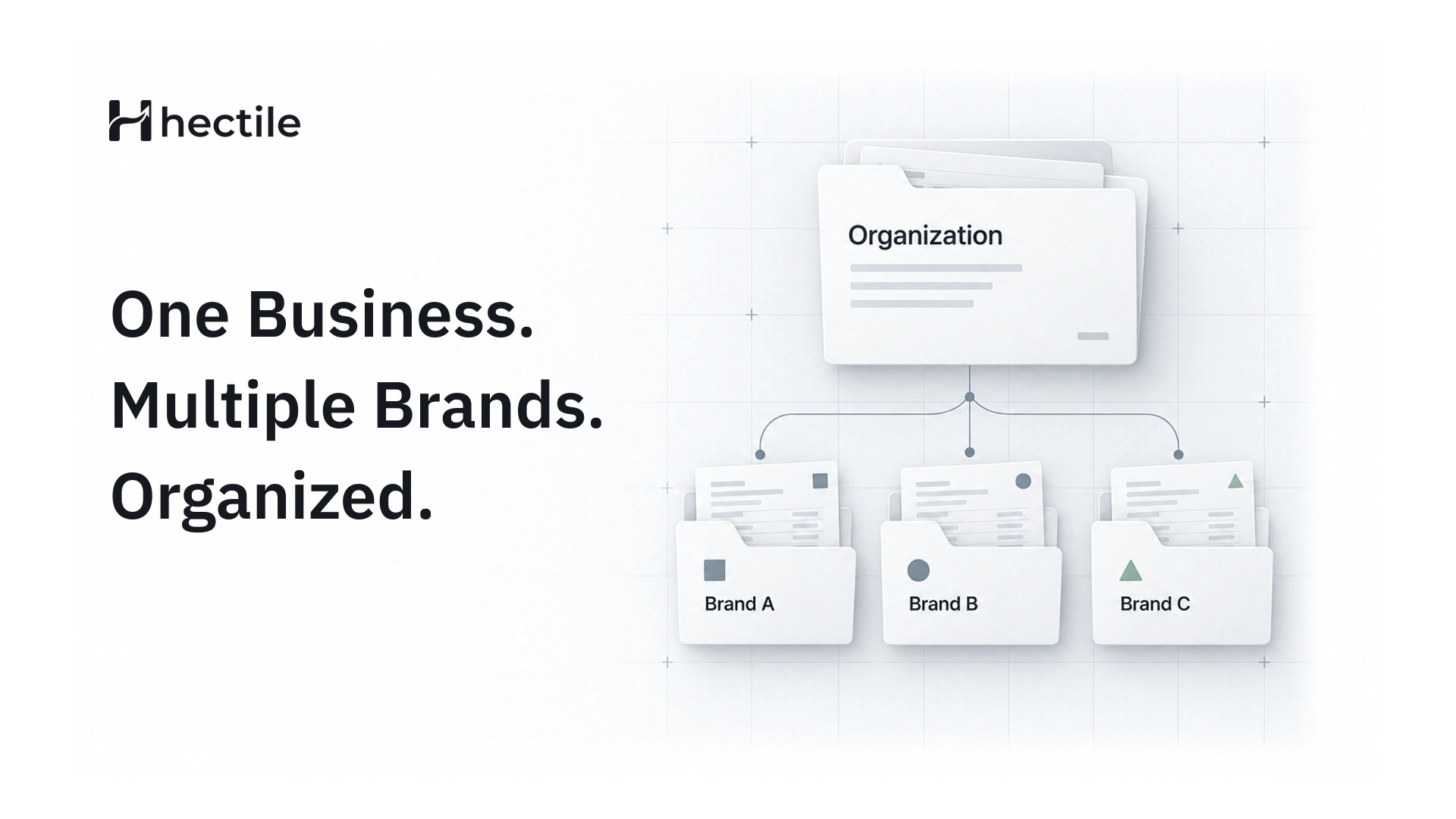
If one registered company trades under several names, those names are brands. The legal entity is the same, the tax registration is the same and the books are the same. Only the customer-facing identity changes: the name, logo, contact details and invoice styling.
This is the common case. A design studio that also runs a marketing service, a retailer with an online store under a separate name, a consultancy with a training arm. One company, several faces.
When you need a separate business
If a brand is actually a separate registered company, with its own registration and its own tax number, it isn't a brand in the invoicing sense. It's a different business. Its invoices must carry its own legal details and tax identity, and its records should be kept apart.
Getting this distinction right matters for tax. Your tax registration belongs to the legal entity, not to the trading name, so invoices from every brand of the same company carry the same registration number.
What each brand should have, and what should be shared
The cleanest setups follow a simple split. Each brand owns how it looks to customers. The business owns everything else.
Each brand should have its own:
- display name, logo and contact details
- footer text on invoices and emails
- invoice and estimate numbering, with its own prefix
- default currency, notes, terms and payment instructions
Shared across all brands:
- your customer list
- your saved items and services
- your team
- tax settings and legal details
That shared layer is where the time savings come from. You add a customer once, and any brand can bill them.
A practical setup, step by step
Here's how we'd set up invoicing for a business with two or three brands:
- Confirm the legal structure. One company with several trading names, or several companies? This decides everything else.
- Create one place for the business. Legal name, address and tax registration, entered once.
- Add each brand. Name, logo, contact details and the footer you want customers to see.
- Give each brand its own numbering. A short prefix per brand, such as BD- for a design studio and HM- for a marketing arm.
- Set each brand's defaults. Currency, standard terms and payment instructions, so new invoices start out right.
- Bring your customers into one list. Merge duplicates as you go. One customer, one record.
- Add your team once. Everyone who invoices can then work across every brand.
Keeping one customer list
Customers who buy from more than one of your brands are where separate systems hurt most. With a shared customer list, the café from Meera's story is one record. A bakery invoice and a catering invoice can both be issued to it, each under the right brand, and you can see everything the customer has been billed in one place.
It also means one set of billing details to keep current. When a customer changes their address or accounts email, you update it once.
Numbering across brands
Each brand should run its own sequence. Clients of one brand never see gaps caused by the other, and each brand's records form a clean, unbroken run. A prefix makes it obvious at a glance which brand issued an invoice, which helps when payments arrive with only a number in the reference. For format ideas, see our guide to invoice numbering formats and rules.
A worked example: one customer, two brands
Back to Meera. Her company now has two brands in one setup: the bakery, numbered BK-INV-, and the catering service, numbered CT-INV-. The café that orders from both is a single customer record.
In the same week, the café receives two invoices. BK-INV-0141 is for the regular bread order, with the bakery's logo, its contact details and the bank details she uses for the bakery. CT-INV-0032 is for a staff lunch, with the catering brand's logo and its own footer. Same customer record, two clearly separate documents.
When the café pays both in one transfer with "0141 and 0032" in the reference, matching is easy, because the prefixes say which brand each number belongs to. At the end of the month, Meera can see everything the café was billed across both brands in one place, and each brand's own sequence is still unbroken.
Signs your multi-brand setup needs fixing
- You've ever sent an invoice with the wrong brand's logo on it.
- The same customer appears more than once, with different details.
- You can't say how much one brand invoiced last month without opening a spreadsheet.
- Only one person in the business knows how invoicing works for a particular brand.
Team access across brands
In a small business, the same few people usually handle invoicing for every brand. It's simplest when team members belong to the business as a whole and can work across all its brands, with roles that decide who can change settings and who just creates and sends documents.
How Hectile handles more than one brand
Multi-brand invoicing is one of the main reasons Hectile exists. Here's how it maps to everything above:
- One Organization for your legal business, holding the subscription, the team, the legal details and the tax profiles.
- Unlimited brands on the paid plan, each with its own name, logo, contact details, footer, defaults and numbering. The 7-day trial includes one primary brand.
- One customer list and one items list, available to every brand.
- Up to 20 team members, with Admin and Member roles, working across all brands. Only Admins can add or archive brands.
- Numbers assigned when you finalize, in that brand's own sequence, so nothing is skipped or reused.
If one of your brands is a separate company, it gets its own Organization, with its own tax identity and subscription, and you can switch between them from the same login.
You'll find a fuller walkthrough on the multi-brand invoicing page, and the Help guide to Organizations and brands explains exactly what each brand controls. For roles and invitations, see managing your team.
Mistakes to avoid
- Treating a separate company as a brand, and issuing its invoices under the wrong tax registration.
- Keeping a separate customer list per brand.
- Sharing one numbering sequence across brands, so neither brand's sequence is complete.
- Letting every team member edit brand settings.
- Copying an old invoice as a template, which is how the wrong logo goes out.
If you're new to invoicing altogether, our guide on how to write a professional invoice covers what each invoice needs, whichever brand it comes from.
Frequently asked questions
Can one business issue invoices under different brand names?
Yes. A single legal business can trade under several names and issue invoices under each one, as long as the invoice also shows the legal business details your local rules require, such as the registered name and tax number. The brand is how you present yourself; the legal entity is who's actually selling.
Do I need a separate tax registration for each brand?
Usually not, if the brands belong to the same legal entity. Tax registration belongs to the business, so every brand's invoices carry the same registration number. Rules vary by country, though, and separate registrations can apply by state or region, so check with your accountant.
Can each brand have its own invoice numbering?
Yes, and it's the cleaner approach. Give each brand its own prefix and sequence so each one stays consecutive on its own. In Hectile, every brand has separate sequences for invoices and estimates, and numbers are only assigned when a document is finalized.
Can my team work across all of my brands?
In Hectile, yes. Team members belong to the Organization and can create and manage documents for every brand. Admins manage settings, including adding brands; Members create and send documents. Membership can't currently be limited to a single brand.
What if my brands are actually separate companies?
Then each company should have its own setup, with its own legal details, tax registration, numbering and records. In Hectile that means a separate Organization for each company, each with its own subscription. You can switch between them from the same account.